What is the ultimate [insert piece of gear here]? Its the question asked by every enthusiast of every activity everywhere. Long hours of debate between friends can be spent critiquing the various attributes of nearly any piece of gear in nearly any sport or activity. Of course its a trick question! There is no ultimate [insert piece of gear here]. Finding the ultimate anything depends on your exact need from that [insert piece of gear here] at any one time. Every positive attribute of any piece of gear will come with sacrifices in some other attribute. There is no ultimate piece of gear, only ultimate gear for any one particular use by any particular user.
Canoes are no different. In the case of a canoe there are many things to consider. Are you canoeing solo, tandem, or floating a family? Are you day tripping or doing extended trips. Are you on flat water only or running rivers? How strong are you and how thick is your wallet?
Personally, the main use of our canoe is for extended expeditions with kids. This can be on freshwater lakes, rivers, saltwater or combinations of all three. This type of use makes certain canoe attributes more appealing than others. Here are some examples of what we would consider positive attributes for a canoe for family tripping:
Durability – Children and adults with children are hard on gear.
Stability – Children are inherently unpredictable creatures, especially when young, and tend to lean over the gunwales with no warning at the most inappropriate of times. Few children – or adults – enjoy capsizing in cold running water and almost certainly losing essential items for the remainder of the journey.
Payload – Children and the gear and food they require take up a lot of space and weigh a lot.
Dryness – In our experience children seldom enjoy sitting in cold water in the bottom of a canoe. Parents seldom enjoy listing to children whinge about this. High bow and stern flare and lots of freeboard help prevent this.
Versatility – We need a boat that can do it all which means it needs to be maneuverable with lots of rocker.
The sacrifices here may or may not be obvious. Durable = heavy. Payload = large and cumbersome. Stable = slow paddling because of width . Dry = prone to redirection from crosswinds because of more freeboard to catch wind. Maneuverable = difficult to track on chopped water. Rocker = slow on flat water.
But you’re a parent so you’re young and strong so portaging a heavy boat and paddling a wide boat with lots lots of rocker across an endless lake is still easy for you. Its far better than flipping a fast, narrow boat in a cold river or Canadian ocean or breaking your featherweight kevlar craft on an unseen rock 3 days from nowhere.
So, what are some examples of ultimate family canoes?
Hellman Slocan in Duratuff. Length: 17’9″. Width: 36″. Depth: 22″ at bow and stern, 15″ at centre. Rocker: A whopping 4″. Payload: 1200 lbs. Weight: 68lbs. This has been our family boat from the beginning and I’d buy it again without thinking. Handcrafted in Nelson, BC. Bob Hellman has been super helpful over the years answering questions and helping with maintenance and repairs.
Nova Craft Prospector 18in Tuffstuff Expedition. Length 18′. Width: 36″. Depth: 23″ at bow and stern, 15″ at centre. Rocker: 2.5″. Payload 1400 lbs. Weight: 72lbs. Another good looking boat and available from MEC which makes it easy to purchase.
“James, I think there’s a bear swimming to you.” Janna’s vision isn’t always the best so I
finish washing the bowl before I look up from the morning dishes and realize
that she’s right. There’s a bear
ferrying across the river, not really trying to swim towards me but the current
is arcing it to the pebbles at my feet.
I stand from my dishwashing squat and take a few steps back from the
main body of the Yukon River and make some noise to let it know I’m here. “Yo Bear! Yo Bear!” It’s become an old joke but I learned from a
wildland firefighting training video years ago that this is what you should say
to an attacking bear. It seems to have
worked in the video so I’ve used it a hundred times since, usually but not
always with success.
As it gets closer I can see its shoulder muscles working
while it’s swimming and realize this black bear is huge. I’ve worked and played around this species a
lot and don’t often see them this big.
Luckily, it’s trying to swim away from me. But, the harder it swims the
closer the current brings it to me and the more it seems to be getting upset.
As I stand there, I use myself as a deterrent between the
bear and the other 7 members of our group.
The four girls are playing while the other parents are starting to pack
up for another day on the river – one that can never match the day we’ve just
lived. I work the angles and make sure
that the bear will land upstream of myself, keeping myself between it and my
downstream family.
Then I hear my oldest daughter, Julia’s, voice, “Dad,
there’s a grizzly swimming towards you on the other side of the river.” I look
over and my first thought to myself is one of pride, “Wow, my 10 year old
daughter can recognize the differences between grizzlies and blacks while
they’re swimming.” My second more lucid
thought is, “I have a grizzly AND a black bear both swimming at me, I have a
family to defend and I’m only armed with a damp dishrag.”
I call to Eric, the other dad, to get the bear spray, a
modestly better mode of defence than a dishrag and do a dance of angles with
the 2 bears and our families being the 3 points of an ever moving triangle with
myself in the middle. A bear bang goes off with no effect on the bears and the
dance continues.
The previous day the plan was to paddle until dusk in the hopes
of seeing even more wildlife than usual in the twilight hours. As usual, most of the day was spent with the
2 canoes rafted up while we lazed about soaking up the sunshine of a
near-Arctic summer. We enjoyed endless
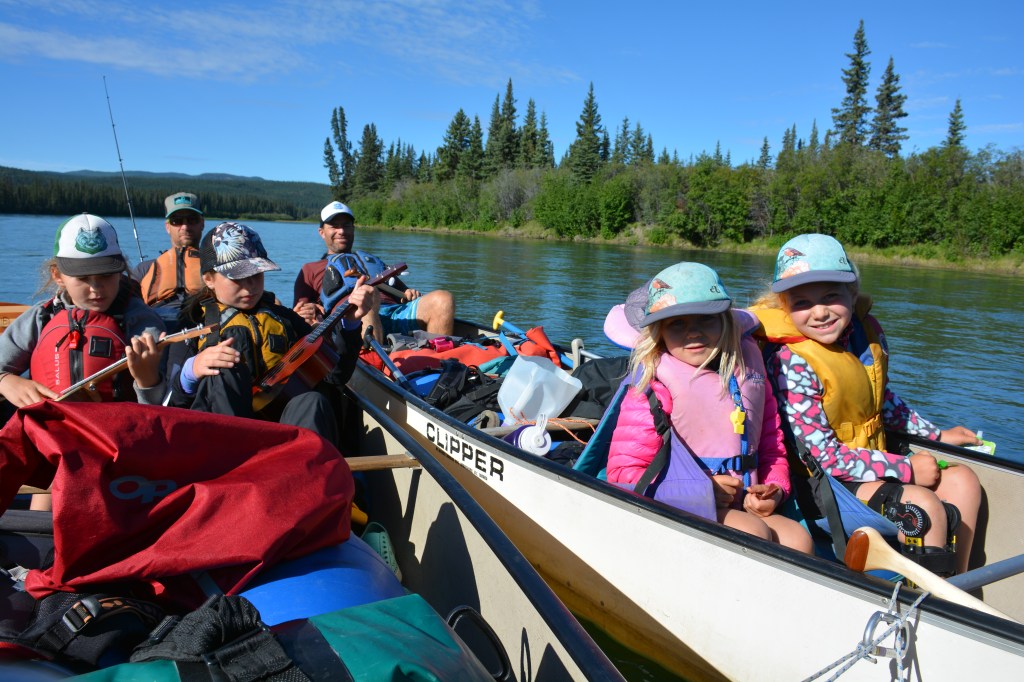
singing and ukulele and the mandatory stop to catch some grayling in a pocket
of clear water at the foot of a joining stream. That afternoon, we heard the
first motor for several days when a conservation officer in a zodiac pulled up
to us. He told the story of two men who were sleeping while their tent was
stomped on by a curious black bear the night before only a few miles
upstream. We had already seen several
black bears that day on the river’s edge and wondered which one it might have
been.
Tallying our wildlife sightings
We were new to the Yukon but figured that it wasn’t usual
for the temperature to be 27C at 9pm. It
had been that way every day for the past nine and we had sunburns to prove
it. It felt like we could paddle all
night and probably have enough light.
The kids had already asked for exactly that – their hope was to pull out
their sleeping bags and fall asleep in the middle of the canoe to the rhythm of
the river around them while mom and dad paddle them into the morning. They’ve done
this a few times before and watching them, I can see that they love it.
At about 10pm, not wanting to paddle the increasingly slate
coloured river all night we decided we should start poking our noses into
eddies to look for a place to set up tents.
My family saw a small inlet and pulled into a narrow 50m long finger off
the main channel with vegetation hanging into the water off both banks. The kids weren’t initially interested in this
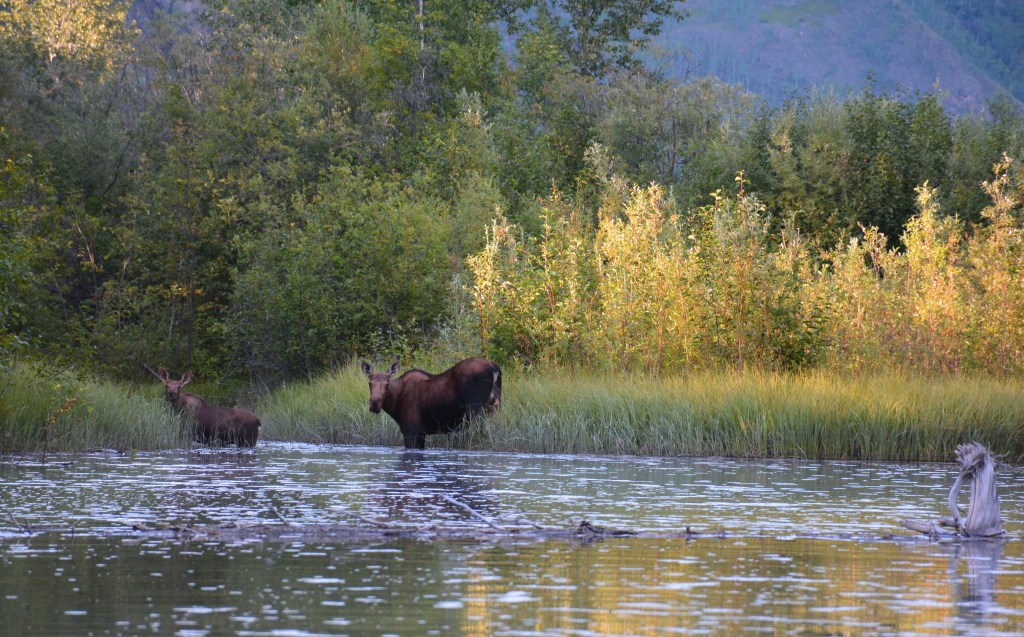
claustrophobic recess until we saw the cow moose and her calf standing in the
water watching us only a few canoe lengths away. We sat in silence for several long minutes
while they munched on whatever moose eat and watched us, more curiously than
cautiously.
When we spun the canoe back into the main current we
couldn’t wait to gloat our friends about the experience we just had. We paddled up to them loudly, barely able to
contain ourselves with the news of what we’d just seen until we realized that
they were even more excited than us. It
turns out that just after we’d nosed in to the channel, they had seen from 10
feet away, a lynx pounce and destroy an unseen but well heard rodent in the
weeds under its feet. They floated
silently by while the lynx earned its dinner unaware of 4 humans less than a
boat length away.
We’re all hungry at this point and its getting darker. We had opted to dine on the water today as
the lovely, shady spot at which we chose to eddy out for lunch was already
occupied by a very large black bear who didn’t seem to want to share his lunch spot
with us. After almost losing count of
bears on the river’s edge and ridgelines today we decided it was more fun to
just float and bloat than stop to eat.
Impending darkness lowered our living standards and we opted to set up
camp on the nearest narrow, stony island.
The usual hum of activity occurred with tents being erected and filled,
canoes being flipped and food being made then stored. The kids were particularly loud and their high
pitched voices filled the fire with stories of bears and moose and lynx. I was away from the group, just out of reach
of the excited voices when I heard the first howl. I called to the girls to hush them. At first they didn’t believe me. Silence. Then I howled. Then we all howled. Then silence again. Then we heard a single
loan howl, not far away, just beyond the far bank. Then the valley erupted with howls, many
wolves but far beyond the treeline. This
continued, the exchange of human and wolven howls for a few minutes until and
after we put the kids to bed.
With the kids in bed I pulled out the trip bottle of tequila
and poured a small glass and fixed my eyes on the near banks to see what I
could make out in the dying light. It
only took a few seconds to see two yellow eyes.
At first I couldn’t be sure what I was looking at but as my eyes slowly
adjusted I could see the svelte black shape and two yellow eyes of a large
wolf, 25m away, staring at me across the narrow channel of the river. I walked
quietly to the tents and whispered to the girls that they should come out
silently. After reassuring them that
nothing would eat them, they joined me in their pyjamas to watch the wolf pace
the near shoreline.
Bed. I woke up early
as usual and got up with the usual plan of stoking a fire to keep me warm while
making the first pot of coffee. I
stepped out of the tent and out of curiosity looked to the spot where we had
watched the wolf the night before. The
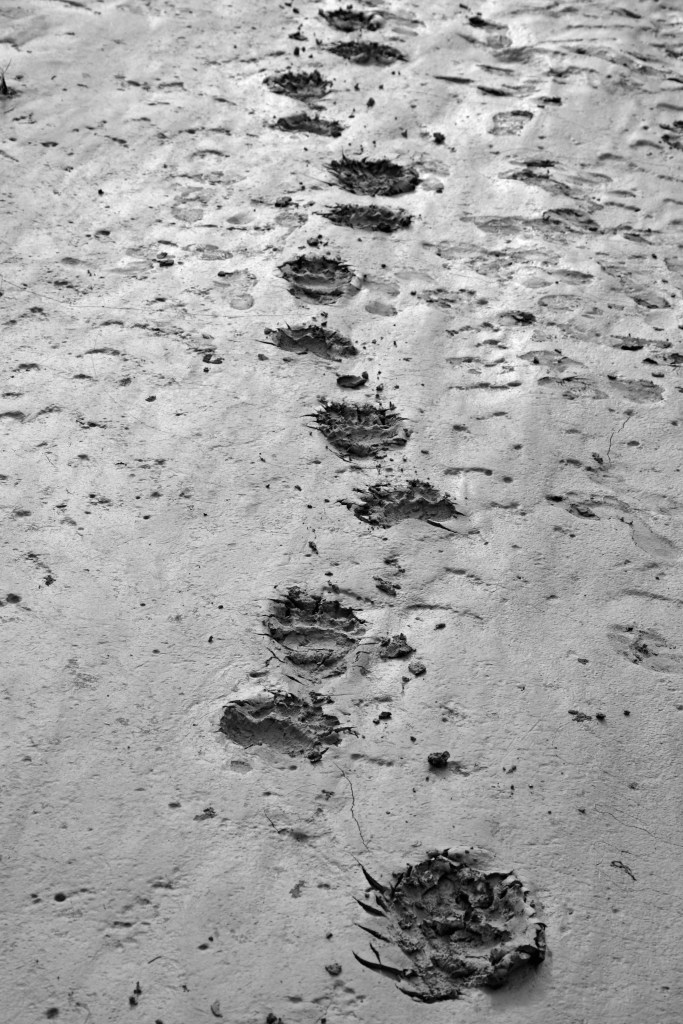
wolf was gone but there were prints the size of my hands scattered about only
metres from our tent. The pack had been
over in the night to sniff us out and perhaps size up the howling visitors in
their territory.
Waking to tracks from our nighttime wolf visitors
We breakfasted and broke camp, the kids still throwing out
the occasional howl to see if the pack of Yukon wolves were still nearby. I
carried the usual dishes to the edge of the river which brings us back to the
beginning of this story.
The black bear reached the island first. My eyes were drawn to the size of its paws
and amount of water they pulled with each stroke. Its transition from swimming to walking the
shore was seamless. It was the same motion, only the paws were now pushing on
rocks instead of water. As I hoped, it
walked upstream away from our group to the far tip of the island. Some silent language was then spoken between
the two bears and the now walking grizzly, having already reached the other
bank of our island turned tail and retreated.
The massive black bear who easily outsized the grizzly then followed in
the same direction and also left our island.
Fresh Bear Tracks
This seemed like the climax to an incredible river trip but
it still wasn’t quite done. We finished
loading our boats and set out again for another float on yet another smoking
hot Yukon summer day, the whole way playing ukulele and reminiscing over all we
had recently seen. That afternoon we saw
plumes of smoke indicating wildfires in our future. All day we watched the smoke move to our left
and right and back but always closer as the river twisted its way through the
subarctic. Finally we were watching a
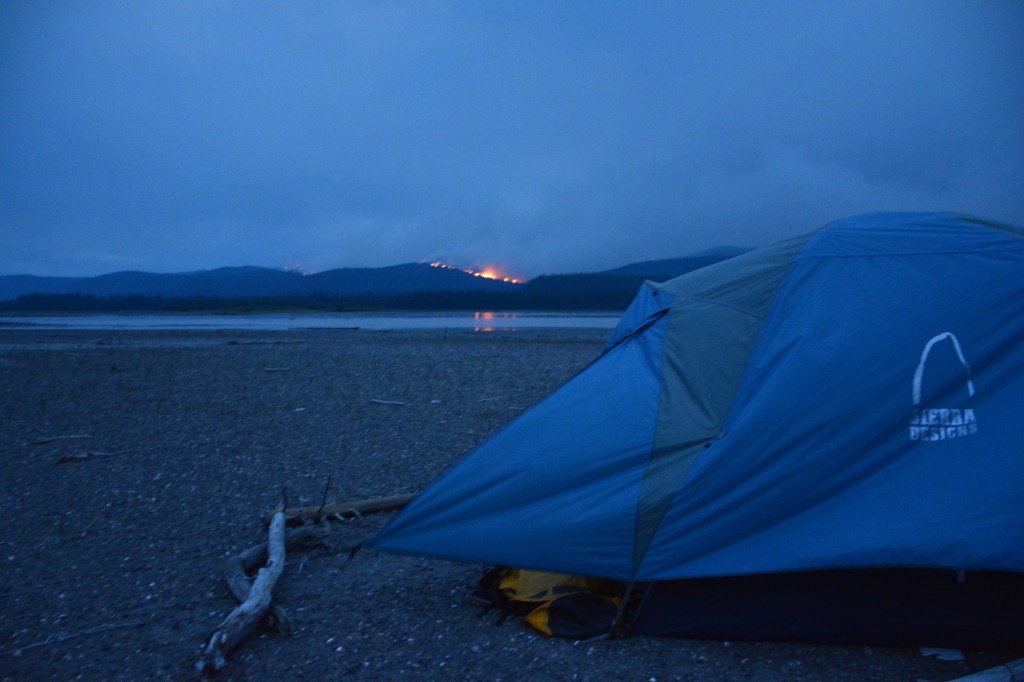
forest fire march down a mountainside in the near dark straight towards us and
the island in the river that we decided to call home that night. It was rank 5 or that’s what we would have called
it while we were firefighting. It wasn’t
a running crown fire but active enough to torch every tree top to bottom in its
path. Fortunately, the wall of flames was doused by the only rain we’d seen
since pointing north in our canoes from Lac Labarge 11 days ago. By morning our tents were covered in ash as
was everything else that was left outside that night and the sun was trying to
shine through the smoke filling the valley.
It had been another late night from the excitement of the flames so we decided for a late start on the water the next day. The adults were quiet, tired and still processing all that had happened. Zadie, the 9 year old 11 days into a river trip done entirely on crutches from a recent knee surgery was the first to give her opinion on the matter. As we paddled away from the flames she dramatically covered her face with a makeshift bailer made from a plastic milk jug and shrieked, “Um, I think we’re a little too close to nature!”
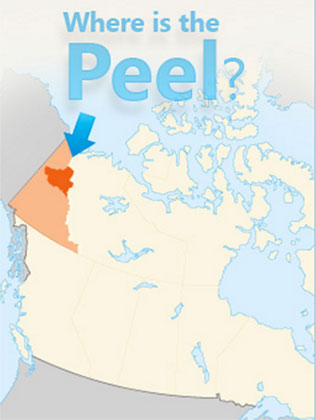
Summer 2019 is on the horizon and our next plan is to paddle the Wind River in the Peel Watershed, Yukon Territory. Our dream is to paddle 3 of the major rivers in the Peel Watershed in 3 consecutive years: the Wind, the Snake and the Bonnett-Plume. We don’t think another family with kids has ever paddled all three and we’d love to spend our next three summers giving it a try!
The Peel Watershed is a 68,000 km2 completely undeveloped wilderness area consisting of several ranges, valleys and tributaries. The Supreme Court of Canada has ruled that 80% of the Peel Watershed must be spared from industrialization but the Yukon government has tried to develop much more of the watershed for mining and other resource extraction. Final consultations are expected this year to decide the fate of the Peel. Will the Peel remain a rugged northern refuge or become another industrial forest?
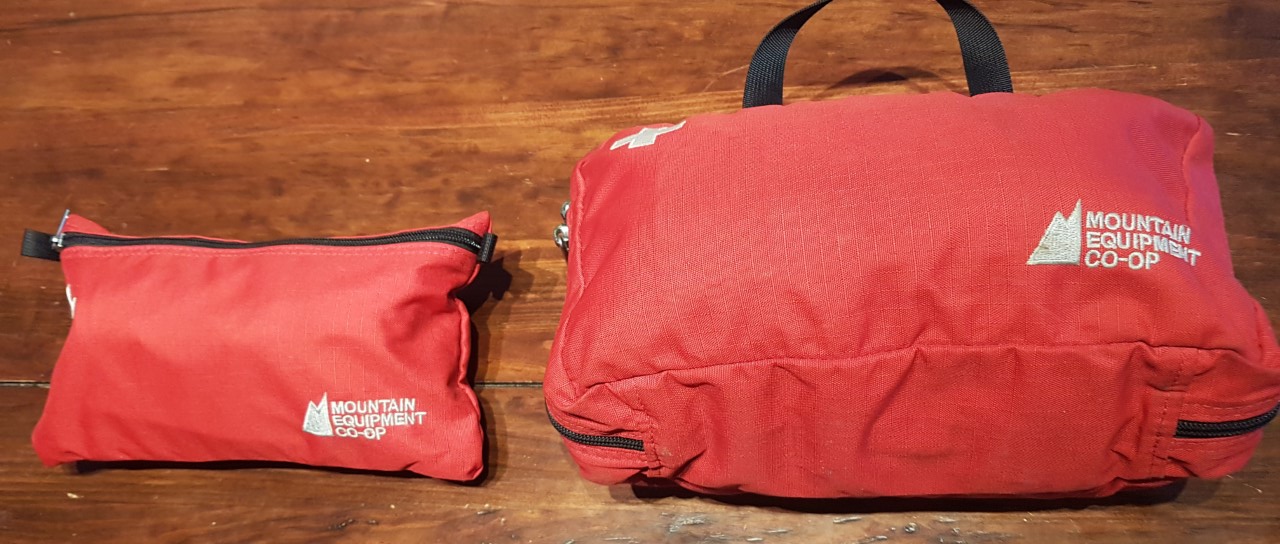
My wilderness first aid kit is basically a small emergency room and pharmacy packed into 2 small, durable bags carried in a dry bag. As an ED physician I carry a kit that allows me to suture wounds, treat bladder, ear and skin infections, decompress a tension pneumothorax, reduce dislocated joints, splint fingers and limbs and even temporize appendicitis whether we’re in Michoacan, Mexico or the Yukon Territory.
But your kit can be more basic and still get you through most of what you’ll ever likely encounter. If you’re in a canoe there’s no need to scrimp too much on weight or a little space so carry a kit that will meet most of your basic needs.
Slightly off topic, my other suggestion is to take a basic first aid and a basic CPR course before heading out into the wilderness with your children.
Wilderness first aid courses are available in Canada through theRed Cross.
Pre-packaged kits are available at many outdoor outfitters or you can build your own. My suggestions for the contents of a reasonable kit include the following:
Medical gloves
Gauze cling rolls
Bandages of different sizes, preferably very adhesive if using on a canoe trip
antimicrobial ointment
butterfly bandages
skin glue (or crazy glue which works well) for small lacerations
nonstick sterile pads
a variety of adhesive tapes
blister pads
triangular bandage
absorbent compression bandages
finger splints
SAM (flexible) splints for extremity fractures
cotton swabs
tweezers
dressing scissors
wound scrub brush
safety pins
CPR mask
thermometer
20cc syringe with blunt tip for irrigating wounds
Over the counter medications I recommend bringing on any trip include:
Analgesics – Ibuprofen (Advil) and acetaminophen (Tylenol) – bring liquid or chewable versions if traveling with kids
sunscreen and insect repellent
nausea medications – dimenhydrinate (Gravol) – again available in liquid, rapid-melt or rectal versions if bringing kids
anti-diarrheal medication – loparamide
antihistamines for allergic reactions / stings
afterbite solution for bites / stings
antacids
nasal decongestant spray (not for kids)
Prescription medications I recommend talking to your doctor about bringing on any extended trip include:
injectable epinephrine (EpiPen) for anaphylaxis
antibiotic ear drops for swimmers ear
antibiotic eye drops (especially if anybody in group has contact lenses)
cephalexin for skin infections (chewable for kids, will also work for bladder infections for kids)
an antibiotic for bladder infections (my recommendation would be nitrofurantoin)
ondansetron wafers for vomiting
My kit also includes:
injectable anaesthetics
a variety of syringes and needle sizes
disposable scalpel
a variety of both resorbable and non-resorbable sutures
toothed and non-toothed forceps, suture driver, small hemostats, penrose drain
16 gauge angiocatheter and 3 way stopcock for temporizing tension pneumothorax
more extensive list of antibiotics, injectable antihistamine
Looking back at Mount Garabaldi after Julia ran her first Class 2 rapids at the sharp end of the boat in preparation for the Wind River.
The lower Squamish is great fun for canoeists. There are many put-in options, in general the higher you go the faster the water. World class eagle viewing with bears, salmon and an abundance of seals in the water. If the inflow winds are calm you can paddle into Howe Sound then back up either the estuary or access downtown via Mamquam Blind Channel.
Accessing the wild for any significant amount of time with kids is challenging. Packing kids, diapers (clean then dirty), extra food, clothes and gear limits your range on foot. But moving over water in a portagable vessel with extensive cargo space allows families to travel great distances over long periods of time.
The goal of this site is to inspire you and your kids to choose canoeing as a way to immerse yourself in the wilderness together. It is both a photo journal of our many trips together and a series of stories and how-to guides for each trip.
We want to build the stoke by showing you some of our experiences and sharing some of the knowledge we’ve learned over the years on everything from gear, food, trip planning and anything else we can think of that will make you want to get out with your kids in a boat!
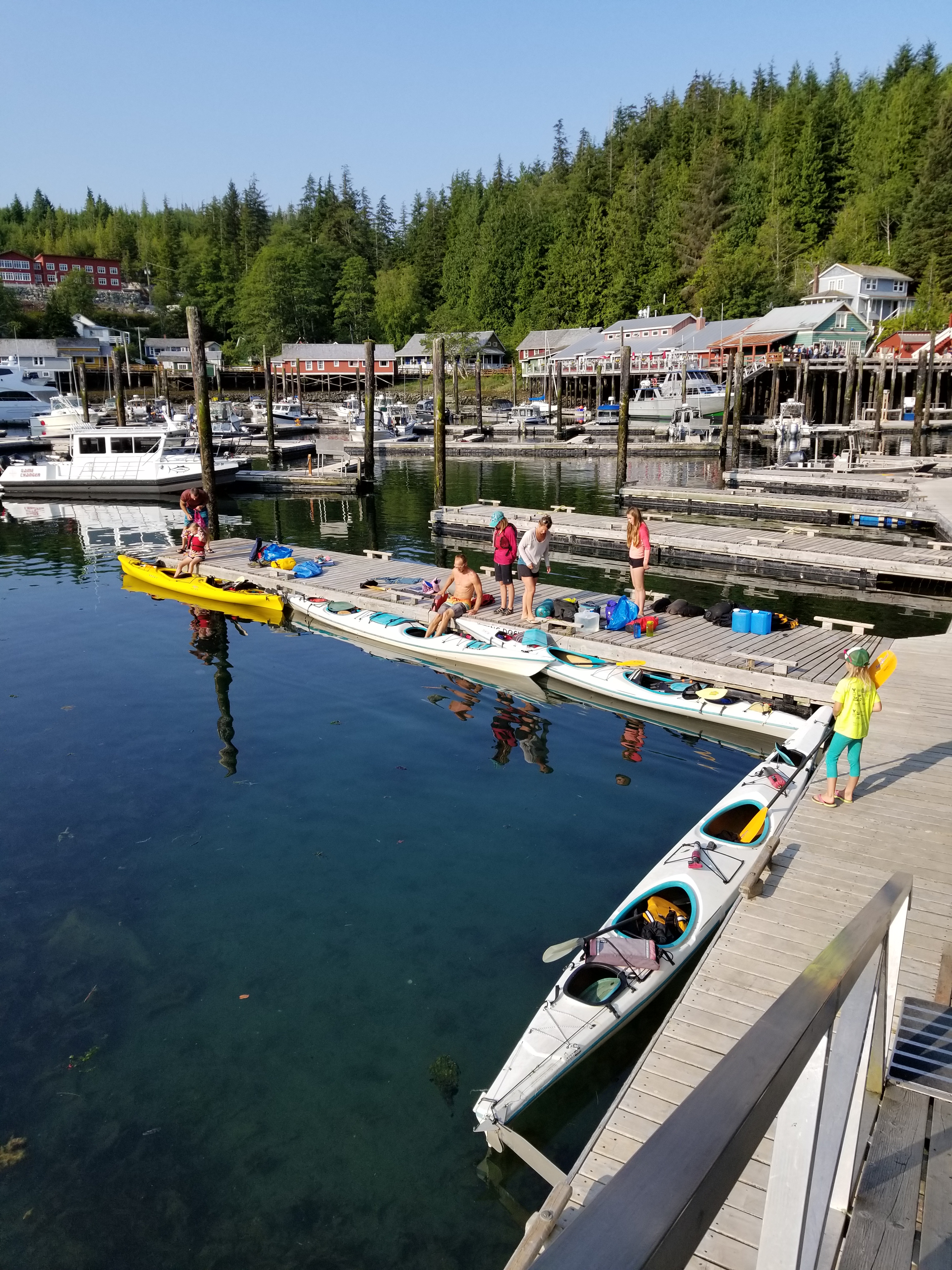
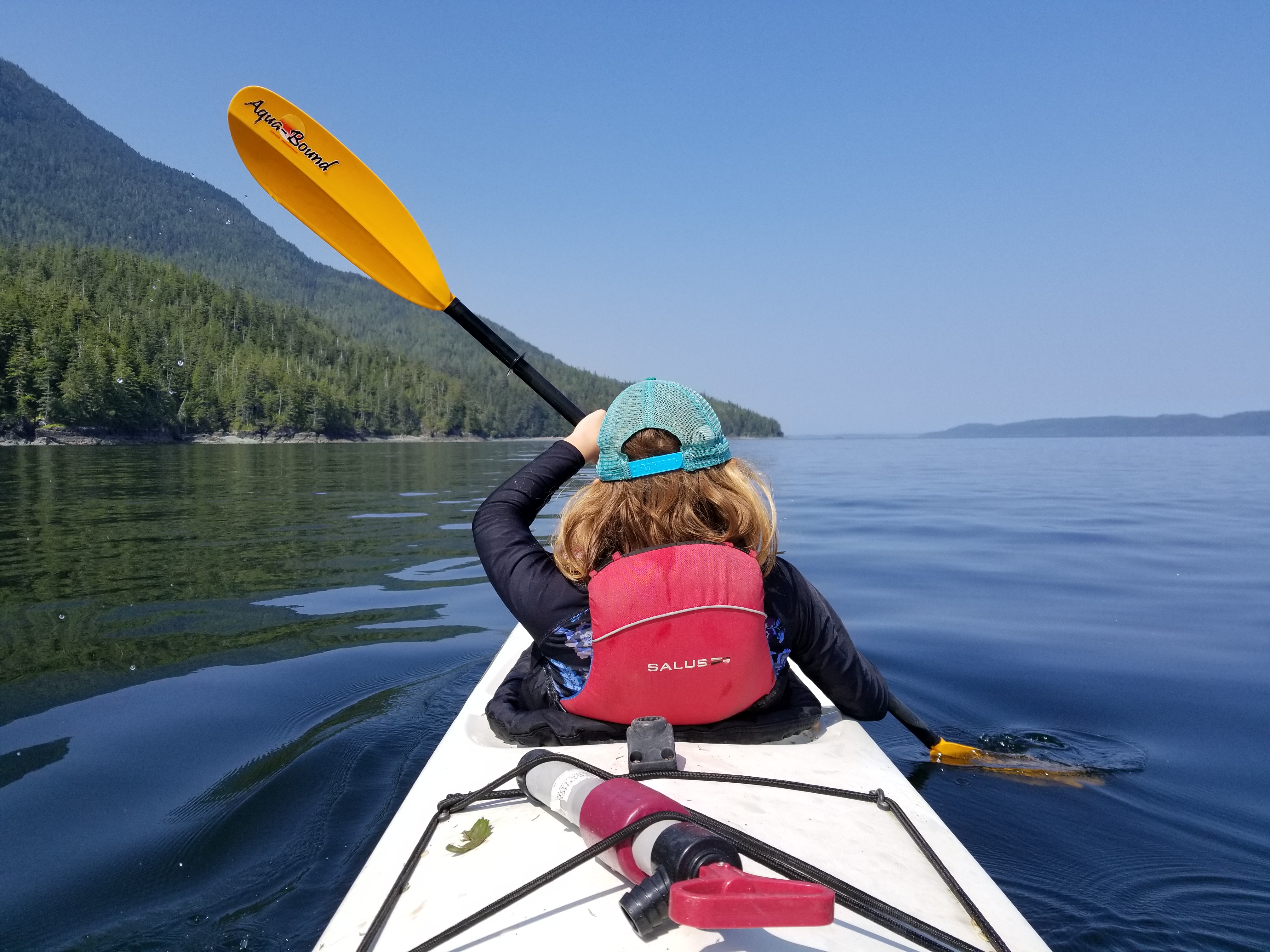
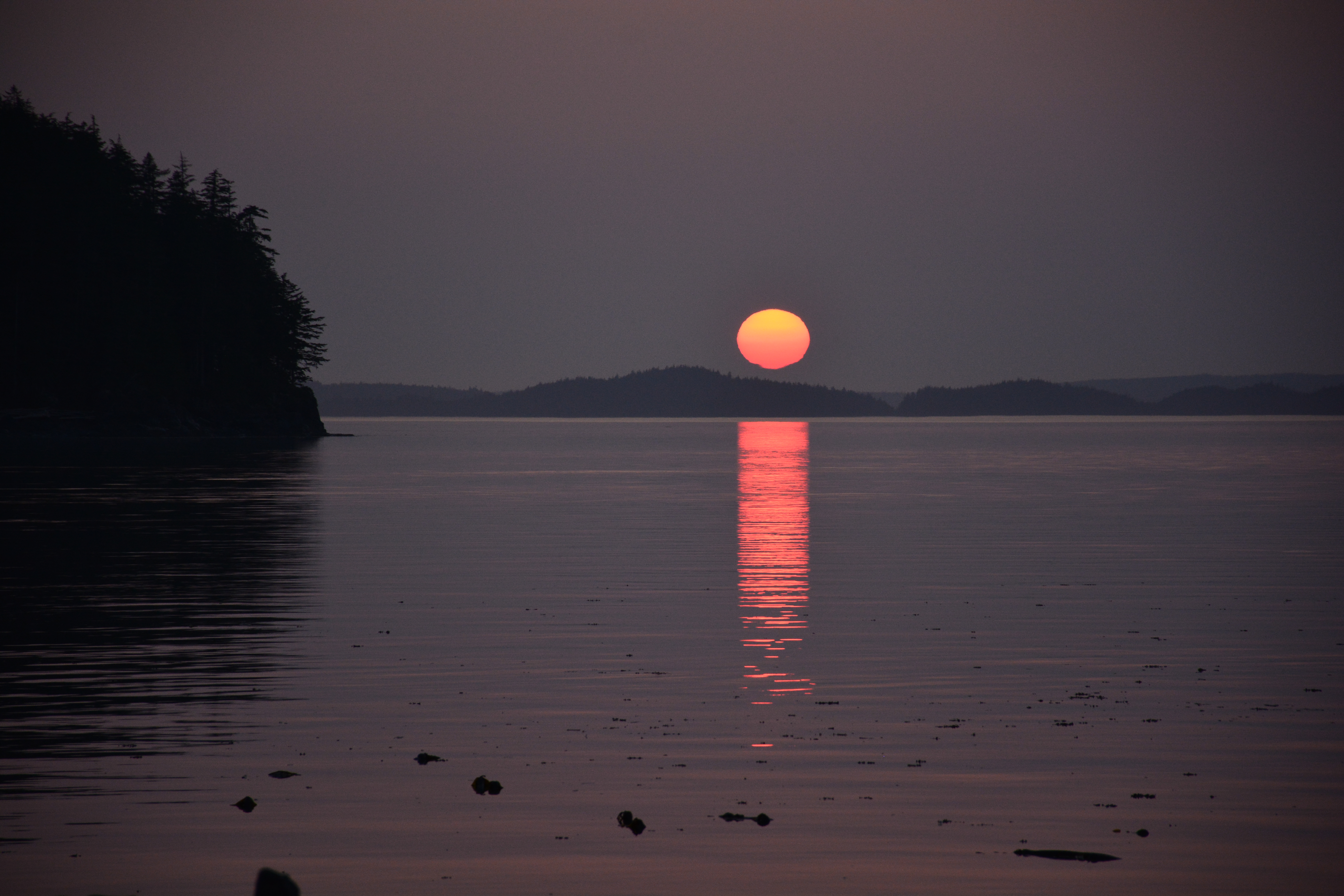
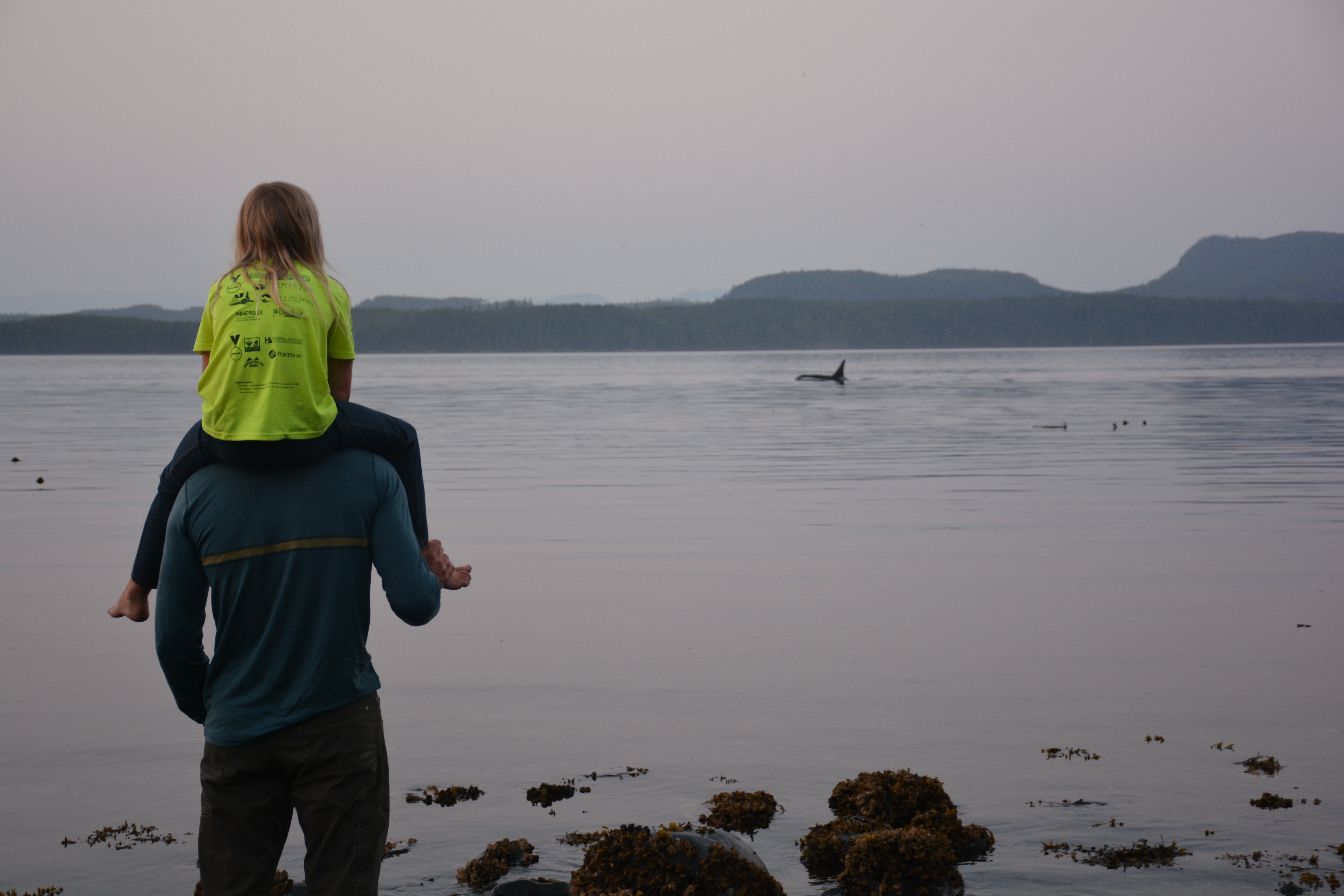
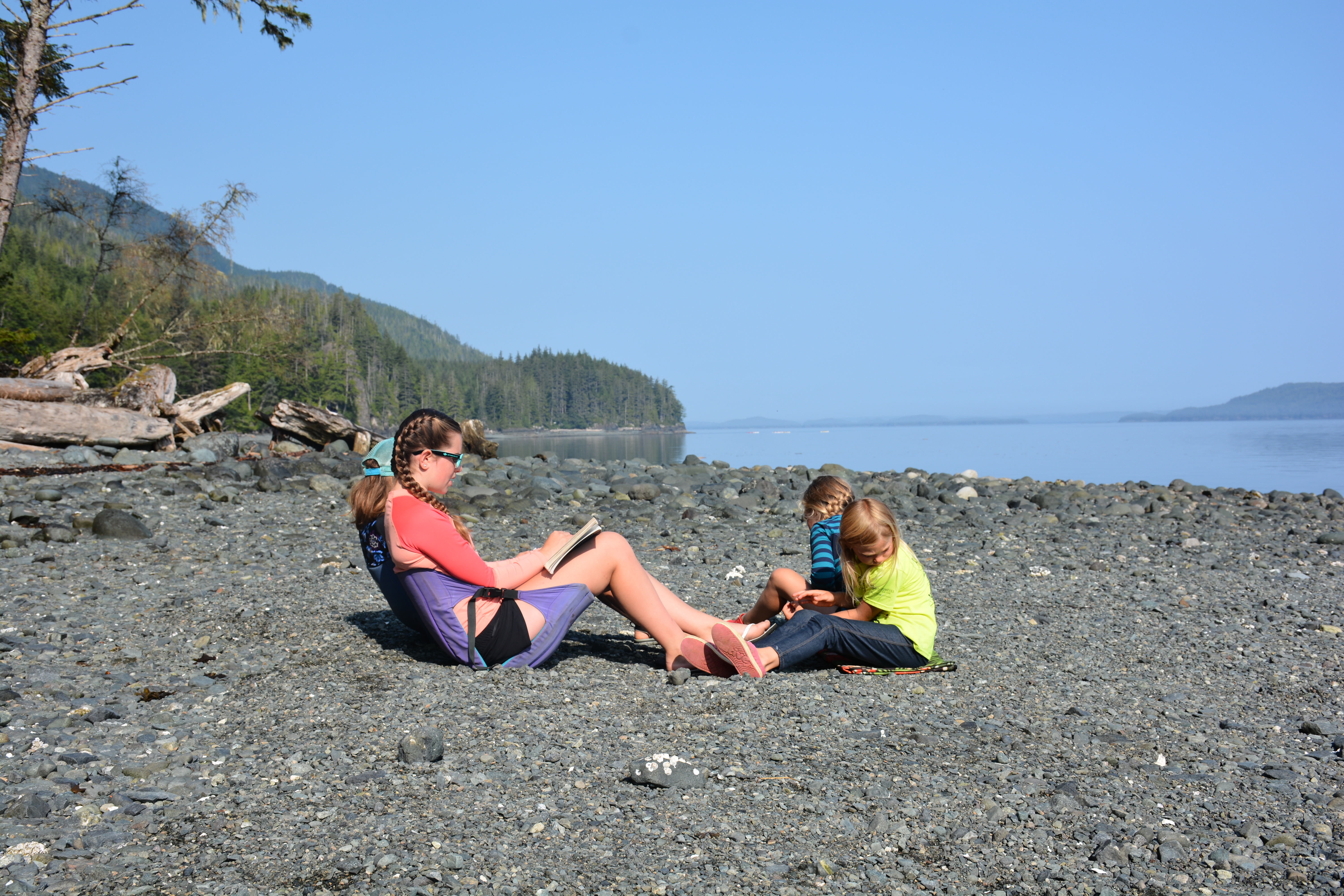
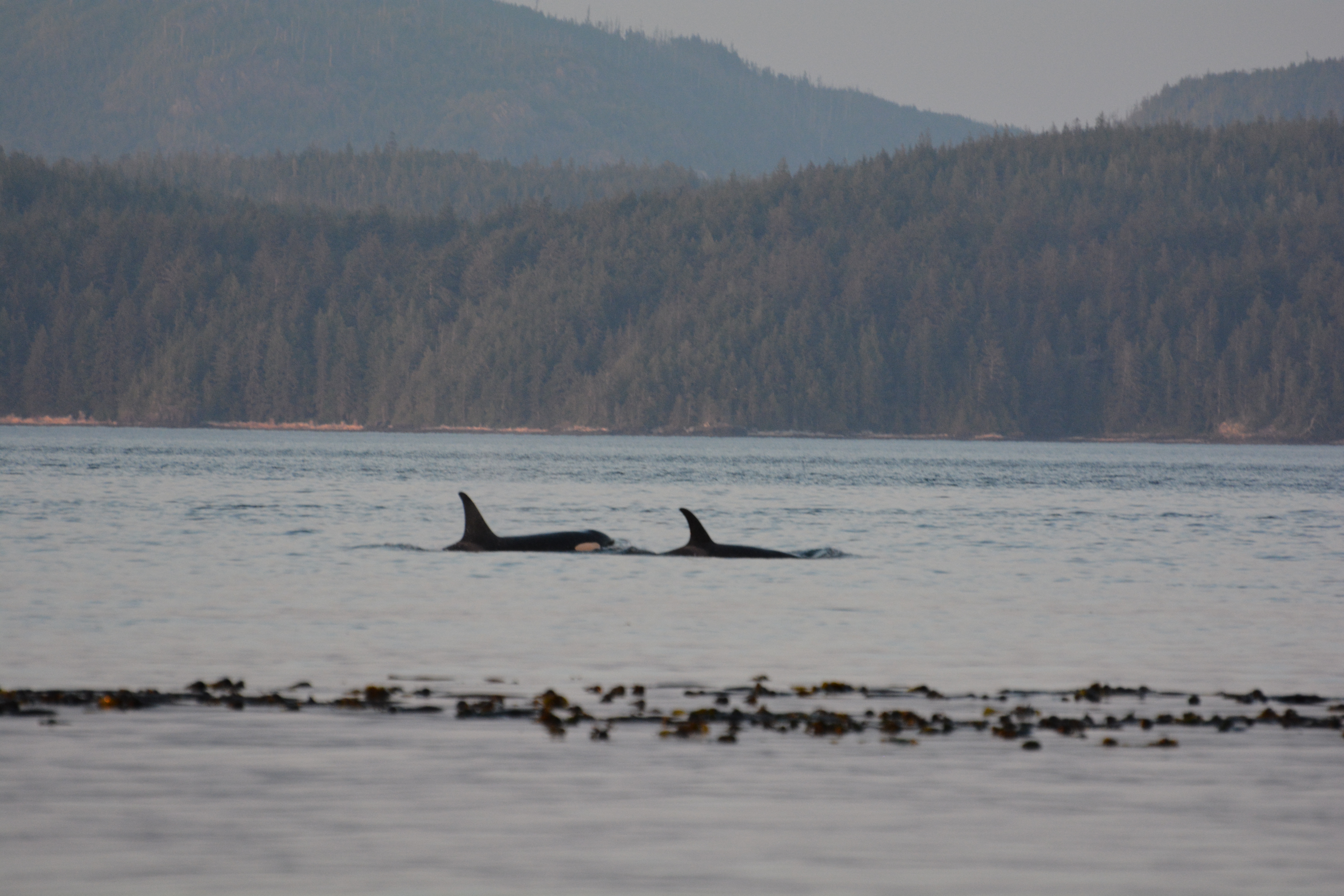
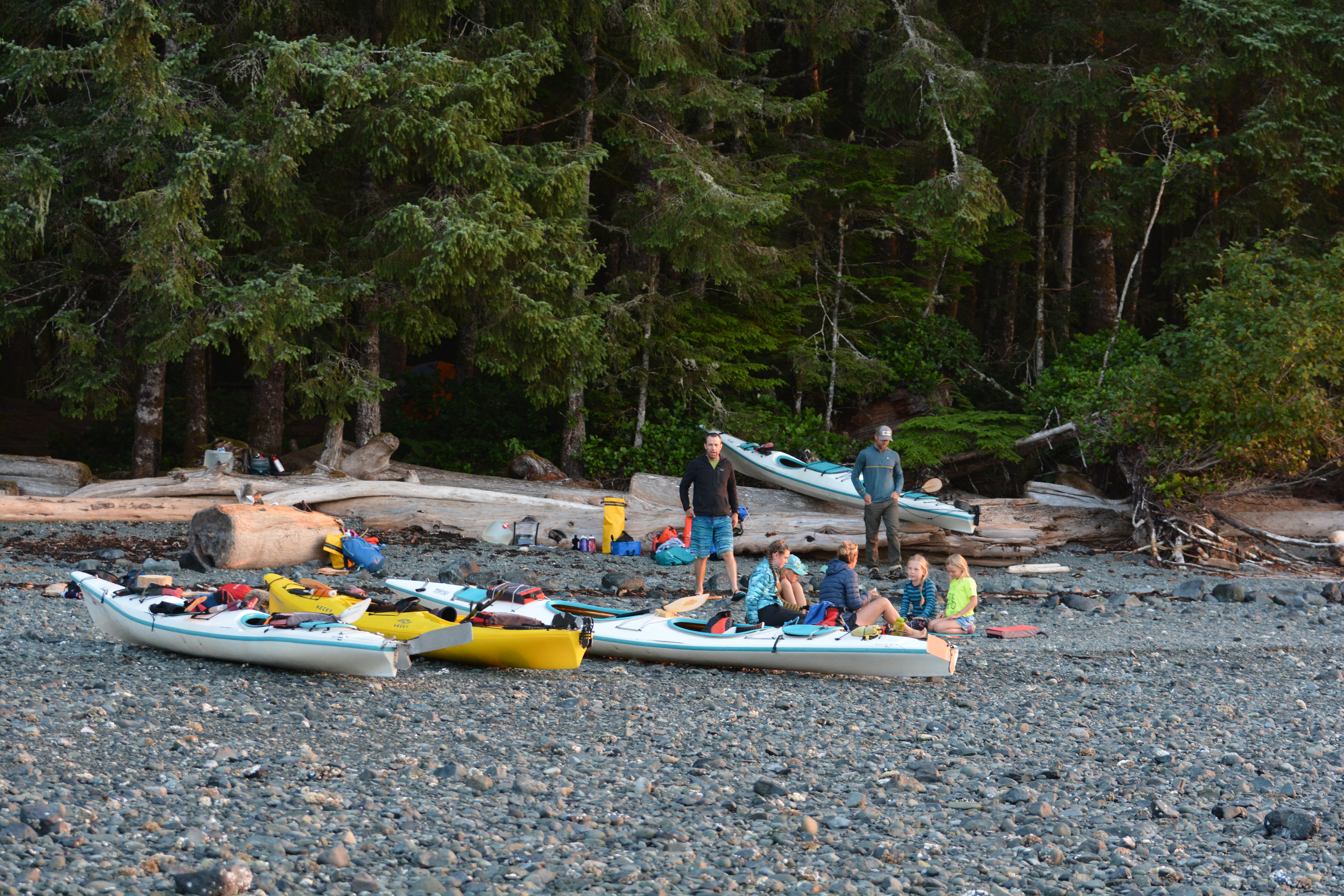
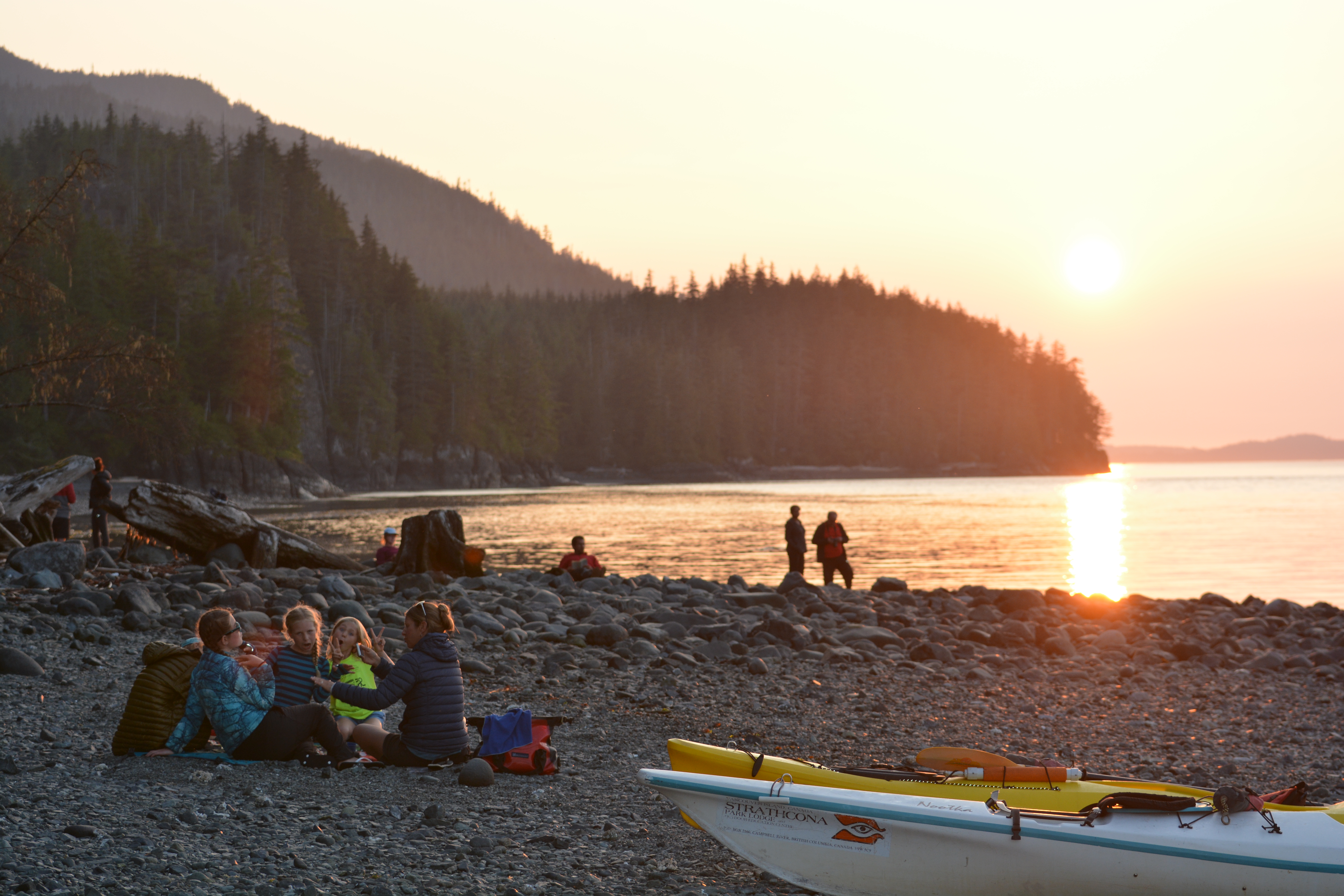
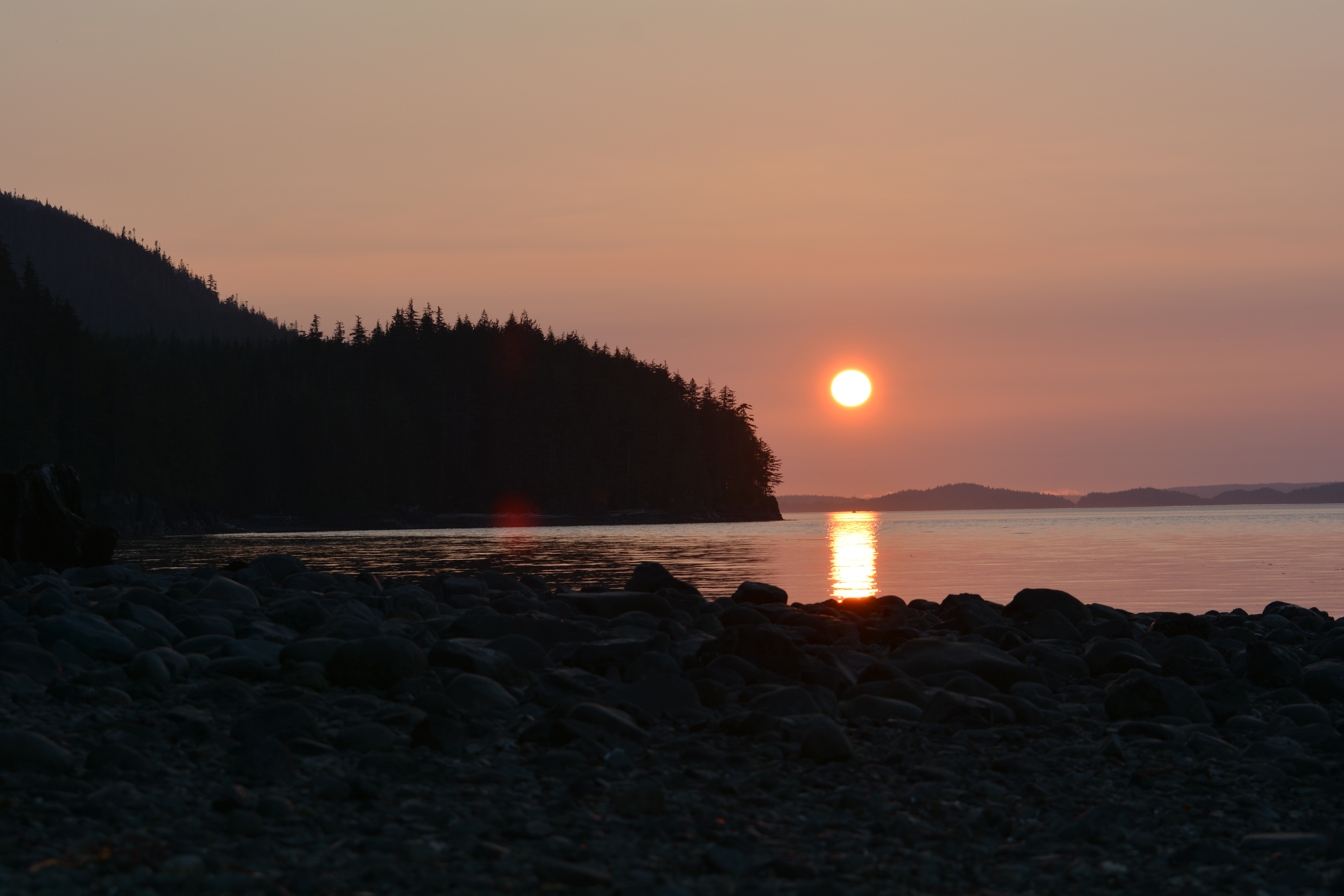
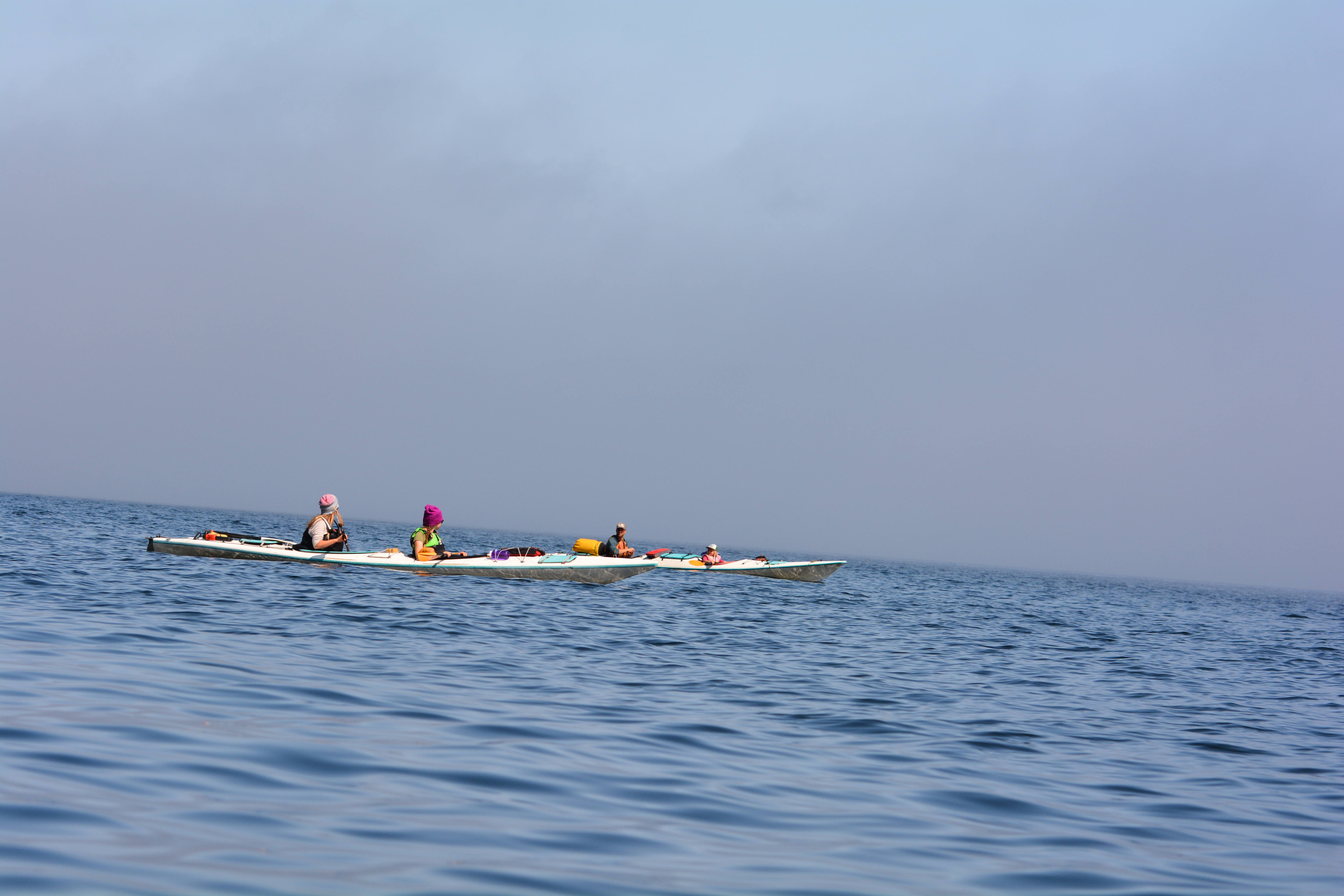
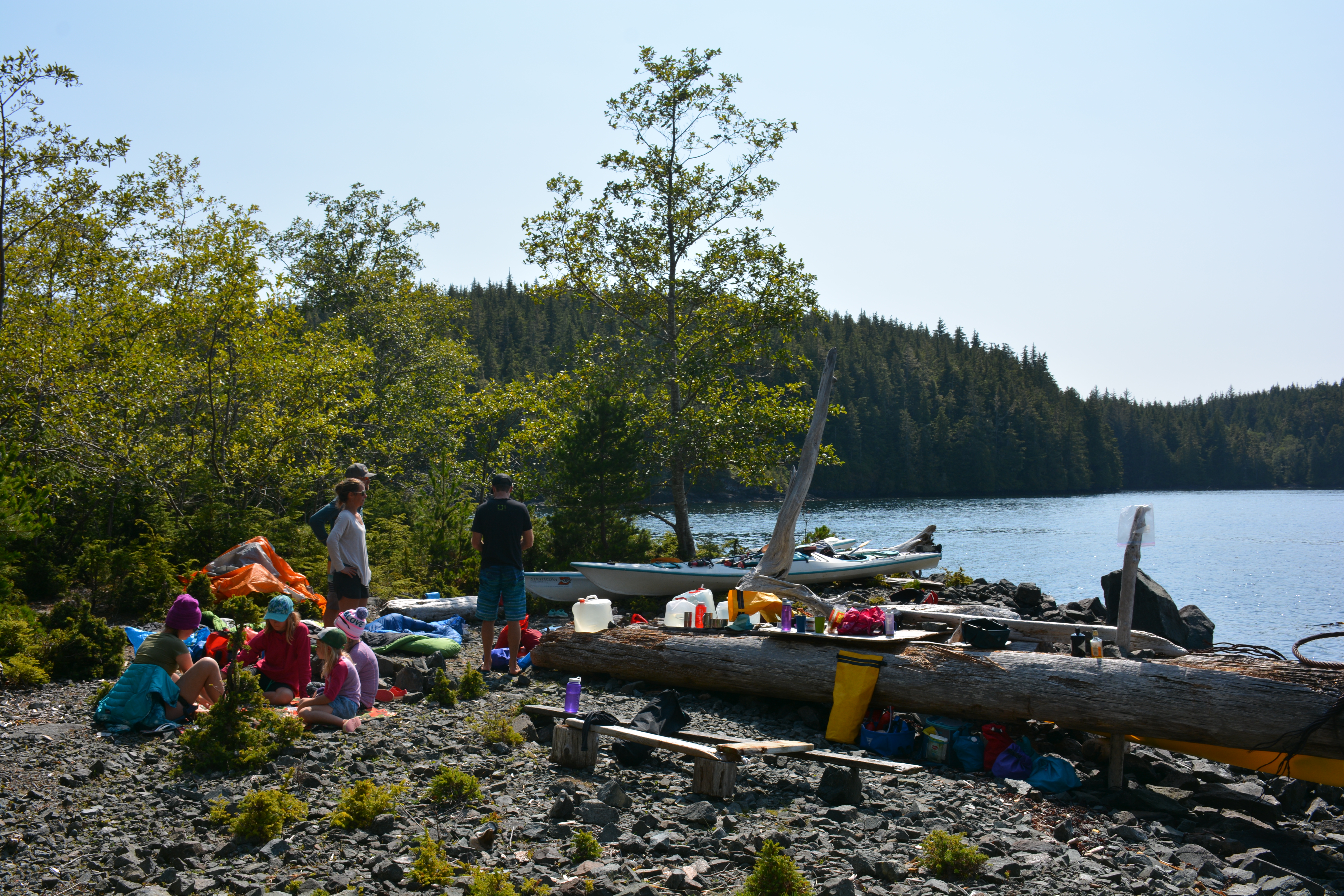
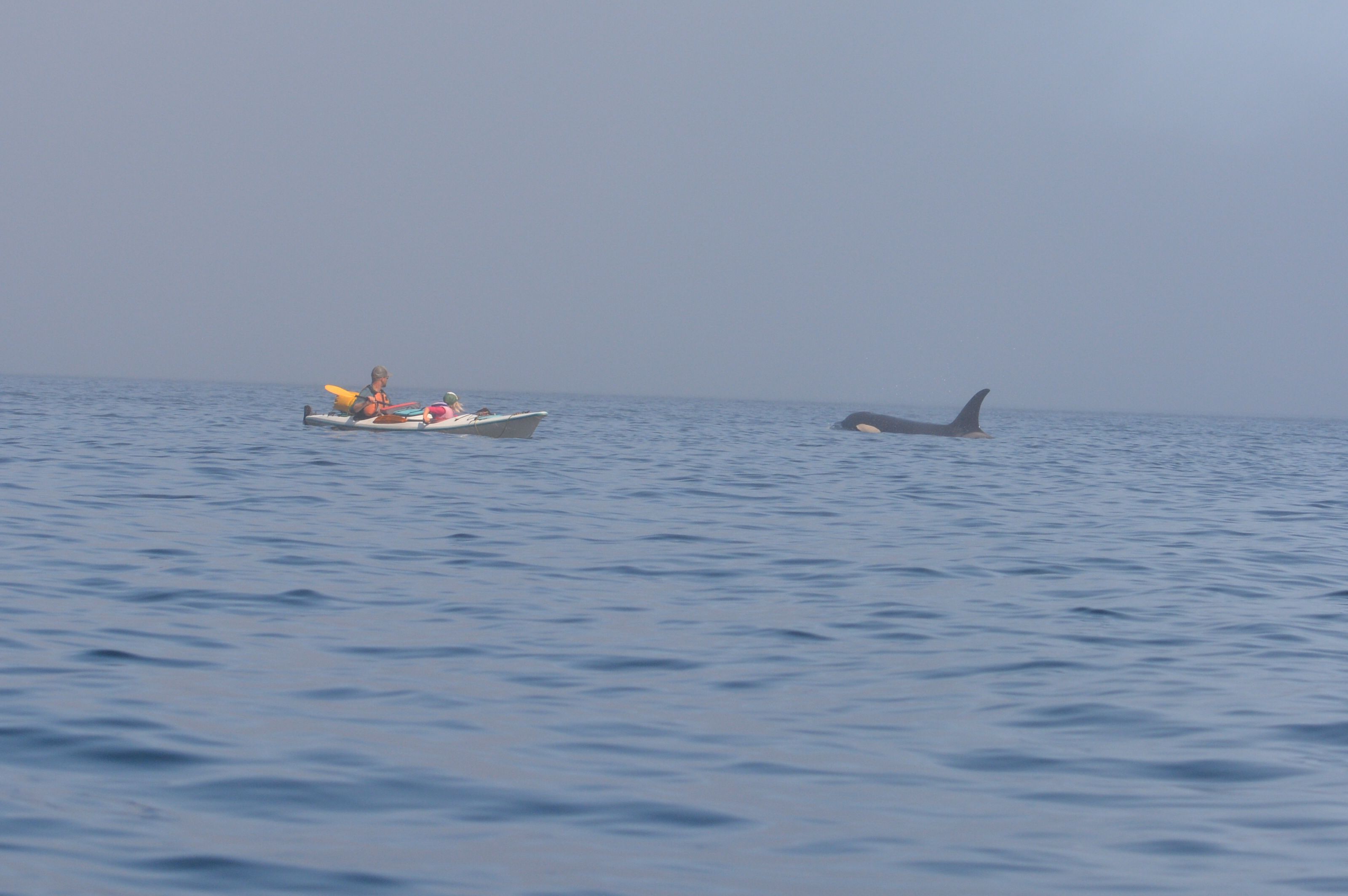
General Description: Orcas. What else should we say? Orcas orcas everyday. Orcas orcas while you float. Orcas orcas from your boat. Humpback whales splash their tails. Great big fins on orca males. Tenting over pebbly beaches. Porpii swim by out of reaches. Wiggly worms down at the tide line. Home dried meals and from a bag wine. Black bears walk by on the shore. Orcas orcas we see more! You get the picture. Dr Seuss would love it here.
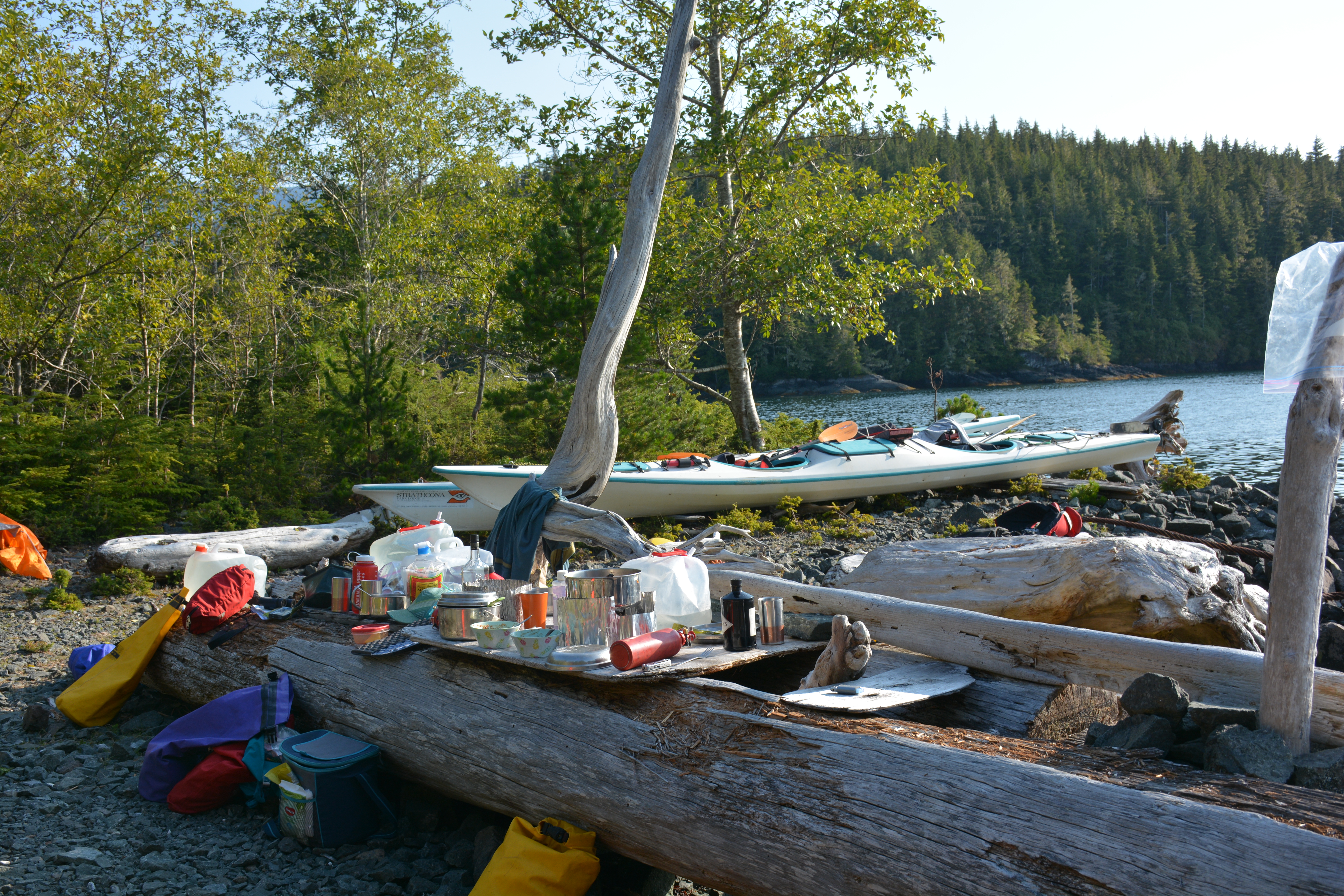
We parked at Telegraph Cove but had kayaks left for us by Strathcona Park Lodge. We re-learned every day the differences between packing canoes and puzzling together pack jobs in kayaks without center hatches. Rent well ahead of time to do this trip as they sell out early.
Difficulty: Moderate. We had glassy weather and could have done the trip in open deck canoes. But the winds and current can be wild here so choose your crossings wisely.
Hazards: current, wind, overly friendly sea-lions and harbour seals.
We flew to Whitehorse to start and finish our trip there. So while we flew up with a lot of food and gear, this trip required much more shopping for fresh food, stove fuel, bear bangers, and other incidentals. Whitehorse has a plethora of outdoor stores.
Canoes, PFDs, paddles, bailers etc:
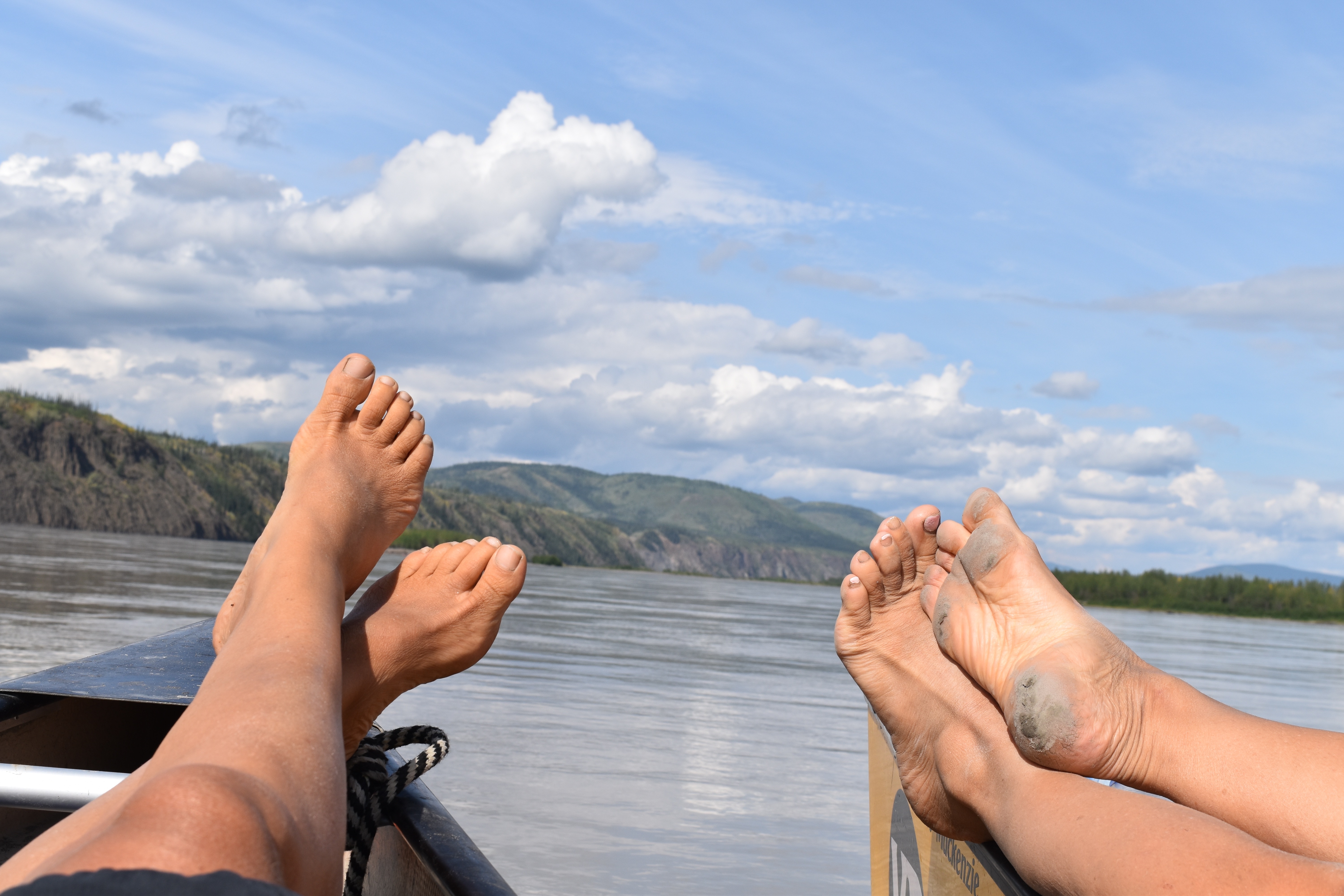
We flew with some stuff but rented 20’ Mackenzies and paraphernalia. We used Kanoe People for shuttle and rentals. They were awesome and we recommend them.
For navigation:
Must buy – Yukon River guide book by Mike Rourke
We relied on “handrailing” the river based on the directions in the guide book. It was an extremely valuable resource. We also had some beta from other people who had done the river. This was really helpful too.
Trip length:
We got the Kanoe people to shuttle us to the North end of Lac Laberge. From there to Dawson City is 620 km. This took us a fairly leisurely 13 days. Carmacks is a convenient half-way’ish restock place or convenient take out/put-in. Dawson City is a well worth a few days of post-trip relaxation and enjoyment. There are good restaurants, showers, laundry, and worthwhile museums etc. We shuttled back to Whitehorse on the Husky Bus.











 A little too close to nature